 Translate
Kanyakumari Beach
About Kanyakumari Beach
Kanyakumari Beach: The Magnificent Confluence of Three Oceans
Standing at the absolute southernmost tip of the Indian subcontinent, Kanyakumari Beach is not just a destination; it is a profound geographical and spiritual experience. Unlike typical tropical beaches where the primary agenda is sunbathing or swimming, the shores of Kanyakumari offer something far more dramatic and soul-stirring. Here, you are standing at the Triveni Sangamam—the rare and majestic confluence where the emerald waters of the Arabian Sea, the deep blue currents of the Bay of Bengal, and the vast expanse of the Indian Ocean collide. The sheer energy of the crashing waves against the rocky shoreline creates an atmosphere charged with history, spirituality, and awe-inspiring natural beauty.
For centuries, travelers, pilgrims, scholars, and explorers have made their way to this very coast. The sand here is famous for its unique multi-colored hues, a phenomenon local folklore attributes to the scattered bridal feast of the virgin Goddess Kanya Kumari, after whom the town is named. Whether you are stepping onto these shores for a spiritual pilgrimage, a deep dive into India's rich cultural history, or simply to witness the most spectacular sunrises and sunsets on the planet, this comprehensive guide will walk you through every nuance of exploring Kanyakumari Beach.
The Magic of Triveni Sangamam: A Geological and Spiritual Marvel
The defining feature of Kanyakumari Beach is the Triveni Sangamam. In Hindu tradition, a 'Sangamam' (confluence) of water bodies is considered highly sacred. Pilgrims from all corners of India travel thousands of kilometers to take a holy dip in these turbulent, converging waters, believing it washes away their sins and brings them closer to spiritual liberation. A designated bathing ghat, complete with steps leading safely down to the water, allows visitors to partake in this ritual. Even if you are not stepping into the water for religious reasons, simply sitting on the stone steps and watching the distinct colors of the three oceans merge is an unforgettable visual spectacle. The water is notoriously rough here, so swimming is strictly prohibited, but the sea breeze and the rhythmic roar of the ocean offer their own form of deep meditation.
The Greatest Show on Earth: Sunrises and Sunsets
If there is one mandatory activity at Kanyakumari Beach, it is waking up before dawn to witness the sunrise. Because of its unique geographic positioning, Kanyakumari is one of the few places in the world where you can watch the sun rise from the sea and set into the sea from the exact same location. During the early hours, the horizon transforms into a stunning canvas of fiery orange, soft pink, and deep violet. Thousands of people gather on the viewing decks and along the rocky outcrops in absolute silence, waiting for the first rays of the sun to emerge from the Bay of Bengal, illuminating the towering silhouette of the Thiruvalluvar Statue.
Similarly, the sunsets over the Arabian Sea are equally mesmerizing. On a clear day, particularly during the Chitra Pournami full moon festival in April or May, you can witness a surreal celestial event: the sun setting in the west while the full moon rises simultaneously in the east. It is an optical illusion of epic proportions and a highly sought-after moment for travelers.
Iconic Landmarks on the Kanyakumari Horizon
The shoreline is dominated by incredible architectural and historical monuments that add to the majestic skyline of the beach. These landmarks are essential stops on your itinerary.
Vivekananda Rock Memorial
Located about 500 meters off the mainland, this grand memorial sits on a massive rock outcrop amidst the churning sea. It was built in 1970 to honor Swami Vivekananda, the iconic Indian philosopher who is said to have swum across the turbulent waters to this very rock in 1892. He meditated here for three days and three nights, attaining the enlightenment that sparked his mission to revive India's spiritual heritage. You can take a short, thrilling ferry ride from the beach to the rock. The memorial houses a meditation hall (Dhyana Mandapam) where visitors can sit in absolute, pin-drop silence, surrounded by the deafening roar of the ocean outside.
The Thiruvalluvar Statue
Standing tall on an adjacent rock is the magnificent 133-foot stone statue of the legendary Tamil poet and philosopher, Thiruvalluvar, author of the revered text, the Tirukkural. The height of 133 feet symbolizes the 133 chapters of his masterpiece. The pedestal represents wealth and love, while the statue itself represents virtue, signifying that wealth and love must be earned and enjoyed on the solid foundation of virtue. The sheer scale of the statue, built to withstand earthquakes and furious sea winds, is a masterclass in modern Indian engineering combined with traditional Dravidian stone carving.
Gandhi Memorial Mandapam
Right on the shoreline stands a uniquely designed pink building—the Gandhi Memorial. This structure marks the spot where an urn containing the ashes of Mahatma Gandhi was kept for public viewing before being immersed in the ocean in 1948. The architecture is mathematically brilliant: the roof is designed with a specific opening so that every year, precisely on Gandhi's birthday (October 2nd), the rays of the midday sun fall directly onto the exact spot where his ashes rested.
Bhagavathy Amman Temple
Overlooking the beach is this 3000-year-old ancient temple dedicated to Goddess Kanya Kumari. The temple is famous for the deity's diamond nose ring, which is said to shine so brightly that it was once mistaken by ancient mariners as a lighthouse, causing their ships to crash into the rocky shores. Because of this legend, the eastern door of the temple facing the sea remains permanently closed and is only opened on special festival days.
Coastal Photography and Wildlife Spotting
Beyond the monuments, the rocky shoreline is an incredible canvas for photography. If you are aiming your lens at the coastline, the dramatic crashing waves against the ancient rocks provide perfect slow-shutter opportunities. Keep an eye out for coastal wildlife; you can often capture striking shots of seagulls, brahminy kites circling above, and various migratory birds depending on the season, along with swift ghost crabs darting across the less crowded sandy patches. The golden hour here isn't just a lighting condition; it's an event that bathes the entire Triveni Sangamam in a surreal, warm glow, providing the perfect contrast against the dark, jagged rocks and turbulent foam.
Shopping and Street Food Along the Shore
The promenade running parallel to Kanyakumari Beach is always buzzing with energy. It is a fantastic place to pick up unique souvenirs. You will find hundreds of small stalls selling intricately carved seashells, conches of all sizes, shell jewelry, and mirrors decorated with colorful coastal finds. You can even get your name expertly engraved on a sea shell in a matter of minutes. When it comes to street food, the beachside vendors offer freshly sliced raw mangoes sprinkled with chili powder and salt, roasted peanuts, sweet corn, and hot, crispy local bajjis (fritters) that are perfect to munch on while enjoying the sea breeze.
How to Reach Kanyakumari Beach
Kanyakumari is brilliantly connected to the rest of India. The Kanyakumari Railway Station (CAPE) is just about a kilometer away from the beach, making it incredibly convenient for train travelers. If you are flying, the nearest major airport is Trivandrum International Airport (TRV) in Kerala, located roughly 90 kilometers away. From the airport, a scenic drive down the NH66 highway will get you to the beach in under three hours. For road trippers coming from cities like Coimbatore, Madurai, or Chennai, the national highways leading into Kanyakumari are smooth, well-maintained, and offer a highly enjoyable drive right down to the tip of the state.
Best Time to Visit
The absolute best time to visit Kanyakumari Beach is during the winter months, from October to March. The weather is pleasantly cool, with temperatures hovering between 22°C and 30°C, and the humidity is much more manageable. The skies are generally clear, which is crucial for getting those uninterrupted sunrise and sunset views. Visiting during the summer (April to June) means dealing with intense heat and high humidity, while the monsoon season (July to September) brings heavy rains and highly aggressive seas, making ferry rides and beach walks difficult or restricted.
Frequently Asked Questions (FAQs)
Can you swim at Kanyakumari Beach?
No, swimming is strictly prohibited at Kanyakumari Beach. The shoreline is extremely rocky, and the water has dangerously strong undercurrents due to the confluence of the three oceans. However, there are designated shallow bathing ghats with safety chains where pilgrims take ritual dips.
What is the Triveni Sangamam?
The Triveni Sangamam is the geographical meeting point of three major water bodies at Kanyakumari: the Arabian Sea, the Bay of Bengal, and the Indian Ocean. It is considered a highly sacred site in Hindu tradition.
How do I reach the Vivekananda Rock Memorial?
You can reach the rock memorial by taking a short ferry ride operated by the Poompuhar Shipping Corporation. Ferries run regularly from the mainland near the beach, usually starting from 8:00 AM until 4:00 PM, weather permitting.
Is the beach open at night?
While the main town area and promenade remain active into the evening, going near the water or walking on the rocks after sunset is highly discouraged and often restricted by local police for safety reasons due to the treacherous terrain and high tides.
What is the phenomenon on Chitra Pournami?
Chitra Pournami is a full moon day occurring usually in April or May. On this specific day, from Kanyakumari Beach, you can witness the rare optical illusion of the sun setting and the full moon rising simultaneously on opposite sides of the horizon.
Photo Gallery
What you'll experience
- 1
Sunrise and sunset views
- 2
Visit to Vivekananda Rock Memorial
- 3
Photography
- 4
Local shopping near the beach
- 5
View of confluence of three seas
Nearby Destinations
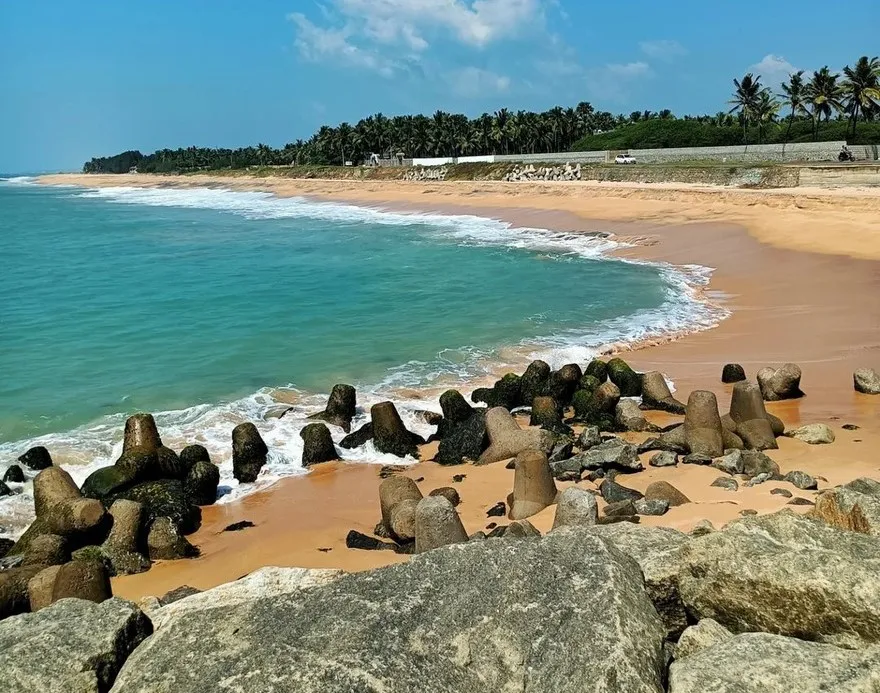
Sothavilai Beach
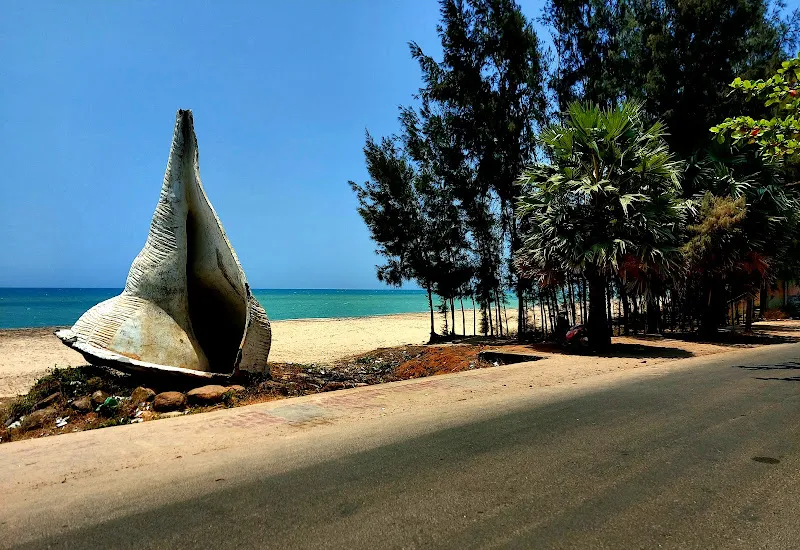
Sanguthurai Beach
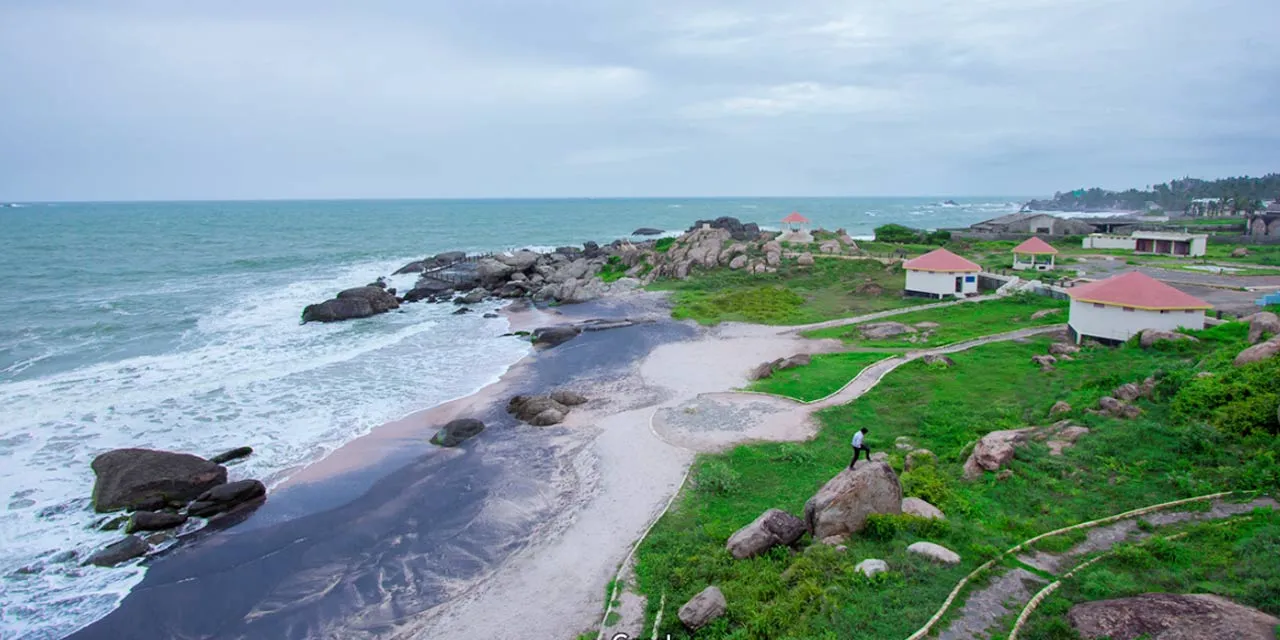
Muttom Beach
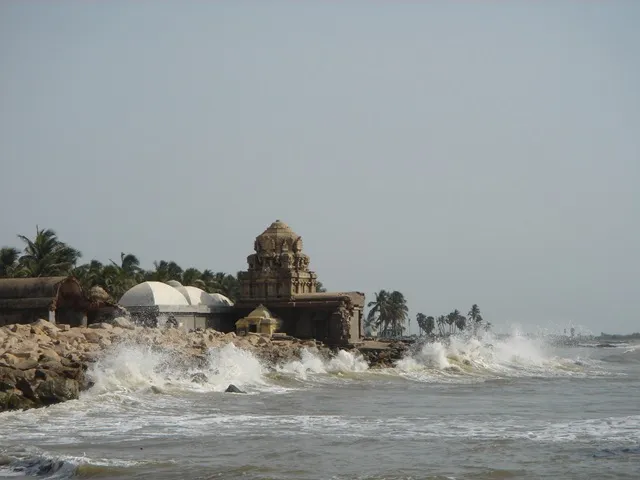
Thengapattinam Beach
These destinations are in close proximity to Kanyakumari Beach and can be visited on the same trip.
Visit Information
Opening Hours
Entry Fee
Best Time to Visit
October to March
Location
Kanyakumari, Tamil Nadu
Contact
For inquiries: NA
Share this destination:
