 Translate
Meenakshi Amman Temple
About Meenakshi Amman Temple
Meenakshi Amman Temple: Inside Madurai's 2,500-Year-Old Living Masterpiece
Most ancient temples ask visitors to imagine what they once looked like in their prime. Meenakshi Amman Temple doesn't need imagination — it's still exactly what it always was: the literal center of a city built around it in concentric rings, still hosting the same nightly ritual that's been performed for centuries, still drawing millions of devotees and visitors to fourteen towering gopurams covered in tens of thousands of painted sculptures. Survived a Delhi Sultanate invasion, rebuilt by Hindu kings determined not to let that be the end of the story, and still functioning today as Madurai's literal city center, this temple is less a sightseeing stop than the organizing principle of an entire city.
This guide covers the temple's real history (including the invasion most visitors don't know about), what to actually see inside, darshan timings and ticket types, dress code and entry rules, how to get there, and a complete FAQ addressing the practical questions every visitor — Hindu devotee or first-time foreign tourist — needs answered before arriving.
Quick Facts Before You Go
- Location: Heart of Madurai city, on the southern bank of the Vaigai River, Tamil Nadu
- Deities: Goddess Meenakshi (an incarnation of Parvati) and Lord Sundareswarar (a form of Shiva)
- Age: Roots traced to around the 6th century CE in Tamil Sangam literature; present structure largely built in the 16th–17th centuries
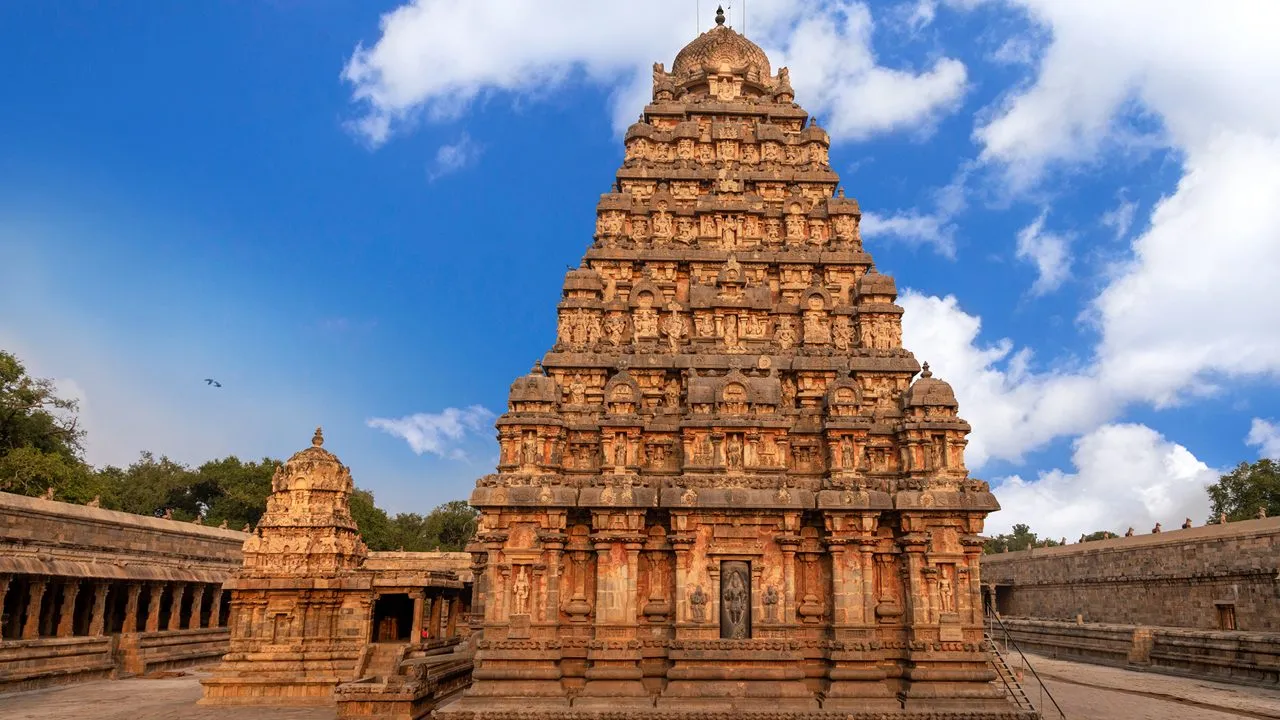
- Architecture: Dravidian style, with 14 gopurams (gateway towers); the tallest, the southern gopuram, rises to about 170 feet (51.9 m)
- Timings: Generally 5:00 AM – 12:30 PM and 4:00 PM – 10:00 PM daily (some sources cite a 4:30 AM opening; confirm current hours locally, as they can shift slightly around festivals)
- Entry fee: General darshan is free; paid special/VIP darshan tickets (roughly ₹50–₹300) are available for faster access
- Famous feature: Aayirakkal Mandapam, the Hall of 1000 Pillars, which actually has 985 intricately carved pillars
- Ideal duration: 2–3 hours for a relaxed visit and darshan
- Nearest airport: Madurai International Airport (IXM), about 11–12 km away
The History: Destroyed, Rebuilt, and Still Standing
Meenakshi Amman Temple's history isn't a straight line of uninterrupted glory — it's a story of destruction and deliberate, determined rebuilding, which is part of why the temple means as much as it does to Tamil Nadu today.
Ancient Origins
The temple sits at the heart of Madurai, a city referenced in Tamil Sangam literature as a major center of learning and culture for over two thousand years. The presiding deity is mentioned in texts dating back to the 6th century CE, and the 7th-century Hindu saint Thirugnanasambandar referenced the temple in his devotional songs, describing the deity as Aalavai Iraivan. Local legend holds that the temple's founding miracle involved the god Indra discovering a self-formed (Swayambu) lingam of Shiva in a forest near Madurai and establishing worship at the site — a story devotees still point to as the spiritual origin of the complex.
The 1310 Invasion
In 1310–1311 CE, Malik Kafur, a general serving the Delhi Sultanate's Alauddin Khalji, led an invasion deep into the Deccan and Tamil country, raiding major temple towns including Madurai for their accumulated gold, jewels, and treasures. The Meenakshi temple was looted and substantially destroyed in the process, along with much of the surrounding temple town — a genuinely catastrophic setback that left the region under contested rule for several decades afterward.
Rebuilding Under the Vijayanagara and Nayaka Dynasties
Restoration began once Vijayanagara Empire forces took control of the region later in the 14th century, rebuilding the temple's core sanctums. The real transformation into the temple visitors see today came under the Nayaka dynasty: Vishwanatha Nayaka, the first Nayak king of Madurai, rebuilt and fortified the complex in the 16th century according to the Shilpa Shastras, the traditional Hindu architectural texts, and redesigned the entire city to radiate outward from the temple in concentric squares. His work was dramatically expanded in the 17th century by Tirumala Nayaka (reigned 1623–1655), who added most of the towering gopurams, the Pudu Mandapam, and several major pillared halls, essentially creating the monumental structure that defines Madurai's skyline today.
What to See Inside the Temple Complex
The 14 Gopurams
The temple's most iconic feature, these towering gateway structures range from roughly 45 to 50 meters in height, with the southern gopuram the tallest at around 170 feet (51.9 m) across nine diminishing tiers. Collectively, the gopurams are covered in tens of thousands of painted stucco sculptures depicting scenes from Hindu epics, local legends, and the divine marriage of Meenakshi and Sundareswarar. The southern gopuram's design is said to have inspired the Tamil Nadu state emblem.
Aayirakkal Mandapam (Hall of 1000 Pillars)
Despite the name, this hall actually contains 985 intricately carved pillars, built in 1569 under the supervision of Ariyanatha Mudaliar, prime minister of the Nayaka dynasty. Several of the pillars are known as musical pillars, producing distinct notes when struck — a genuine feat of acoustic engineering built directly into the stone.
The Golden Lotus Tank (Potramarai Kulam)
A sacred temple tank at the center of the complex, tied to the legend of Indra's golden lotuses and traditionally said to have served as a testing ground where ancient Tamil Sangam poets gauged the literary merit of their work.
Pudu Mandapam (Vasantha Mandapam)
Completed by Tirumala Nayaka in the 17th century, this 124-pillared hall just outside the main walled complex is intricately carved with scenes from Meenakshi's wedding to Shiva and depictions of everyday life, including elephants eating sugarcane.
Goddess Meenakshi and Lord Sundareswarar Shrines
The two principal sanctums of the complex, dedicated respectively to the goddess and her consort. Only Hindus are permitted to enter these innermost sanctums; visitors of other faiths are welcome throughout the rest of the temple complex.
Other Highlights
- Kilikoondu Mandapam: Historically housed parrots trained to say Meenakshi
- Golu Mandapam: Used during Navaratri, when the goddess is dressed in nine different forms across nine days
- Art Museum: Located within the complex, with sculptures and historical artifacts on display
- Stone inscriptions: Found on the shrine walls, documenting centuries of ritual practice and social history
Darshan, Pooja, and Ticket Types
General Darshan
Free for all visitors, with no ticket required. This is the standard way most devotees and tourists experience the temple.
Special and VIP Darshan
Paid tickets, generally in the range of roughly ₹50 to ₹300 depending on the type, allow faster access and shorter queues, particularly valuable during festivals or peak visiting hours. VIP darshan typically includes access to both main shrines with less waiting time, while special entry tickets may grant faster access to a single shrine.
Pooja and Ritual Bookings
Abhishekam (ritual bathing of the deity) and Kalyanam (ceremonial wedding ritual) bookings are available for devotees seeking a more personalized ritual experience, generally bookable through the temple's official booking channels.
The Nightly Procession
One of the temple's most distinctive living traditions: every evening, a ritual procession carries an image of Sundareswarar to Meenakshi's chamber, symbolizing the divine couple's nightly reunion, before returning him the next morning. This ceremony, often associated with the Palliarai Pooja around 9:30 PM, is one of the most atmospheric moments to witness if your visit lines up with it.
Dress Code and Entry Rules
- Dress modestly: Shoulders and legs should be covered. Traditional attire — dhotis or kurtas for men, sarees, churidars, or long skirts with covered shoulders for women — is recommended, and some sources note traditional wear may be required for entry to certain inner areas.
- Footwear must be removed before entering, with free or low-cost (₹5–₹10) storage counters available at each entrance.
- Electronics are restricted: Mobile phones, cameras, and smartwatches are generally not permitted inside; secure locker facilities are available near the entrance.
- Inner sanctum access: Entry to the temple complex is open to people of all faiths, but only Hindus are permitted into the innermost Meenakshi and Sundareswarar shrines specifically.
- Photography: Rules vary by section of the complex — check signage or ask temple staff before photographing inside specific halls or shrines.
Getting to Meenakshi Amman Temple
From the United States
There are no direct flights from the US to Madurai, so the realistic route is to fly into a major Indian gateway city and connect onward.
- Fly into Chennai or Bengaluru from the US, since these offer the best international connections.
- Connect to Madurai International Airport (IXM): Regular domestic flights run from Chennai, Bengaluru, Mumbai, Delhi, and other major Indian cities, with some international connectivity as well.
- From the airport, it's about 11–12 km to the temple, roughly a 30-minute taxi ride.
By Train
Madurai Junction is the main railway station, just about 2 km from the temple, with strong connections to Chennai, Bengaluru, Mumbai, Delhi, Kolkata, Coimbatore, Tiruchirappalli, Tirunelveli, Rameswaram, and other major cities across South India.
Local Transport
- Auto-rickshaw or taxi: Widely available from the railway station, airport, or anywhere in the city, and the easiest option for most visitors.
- App-based cabs: Ola and Uber both operate in Madurai.
- City buses: An economical option with frequent service on several routes through the city center.
Best Time to Visit
- Time of year: December–January offers the most comfortable weather, with temperatures between roughly 20–30°C, though expect larger crowds during this period.
- Chithirai Festival (April–May): The temple's grandest annual celebration, marking the celestial wedding of Meenakshi and Sundareswarar, with the temple open on extended hours (often 4:00 AM to midnight) during this period — a spectacular but extremely crowded time to visit.
- Float Festival / Teppam (January–February): Deities are taken on decorated floats around the Mariamman Teppakulam tank, with the temple remaining open until around 11:00 PM and ceremonies continuing at the tank.
- Time of day: Early morning, between roughly 5:00 and 7:00 AM, is consistently the least crowded and most peaceful window for darshan.
- Avoid: Midday hours (roughly 12:00–3:00 PM), when heat is most intense, especially March through June.
- Quieter season: June–September, the monsoon and post-monsoon months, typically see fewer visitors and are well suited to unhurried exploration and photography.
Building a Visit Around the Temple
- Morning: Early darshan (5:00–7:00 AM) during the quieter window, followed by a walk through the Aayirakkal Mandapam and Art Museum
- Midday break: The temple closes between roughly 12:30 PM and 4:00 PM, a natural window for lunch and rest at a nearby hotel or café
- Evening: Return for the evening Sayarakshai Pooja, with hundreds of oil lamps lit and arathi performed, followed by the temple's most atmospheric hours after sunset
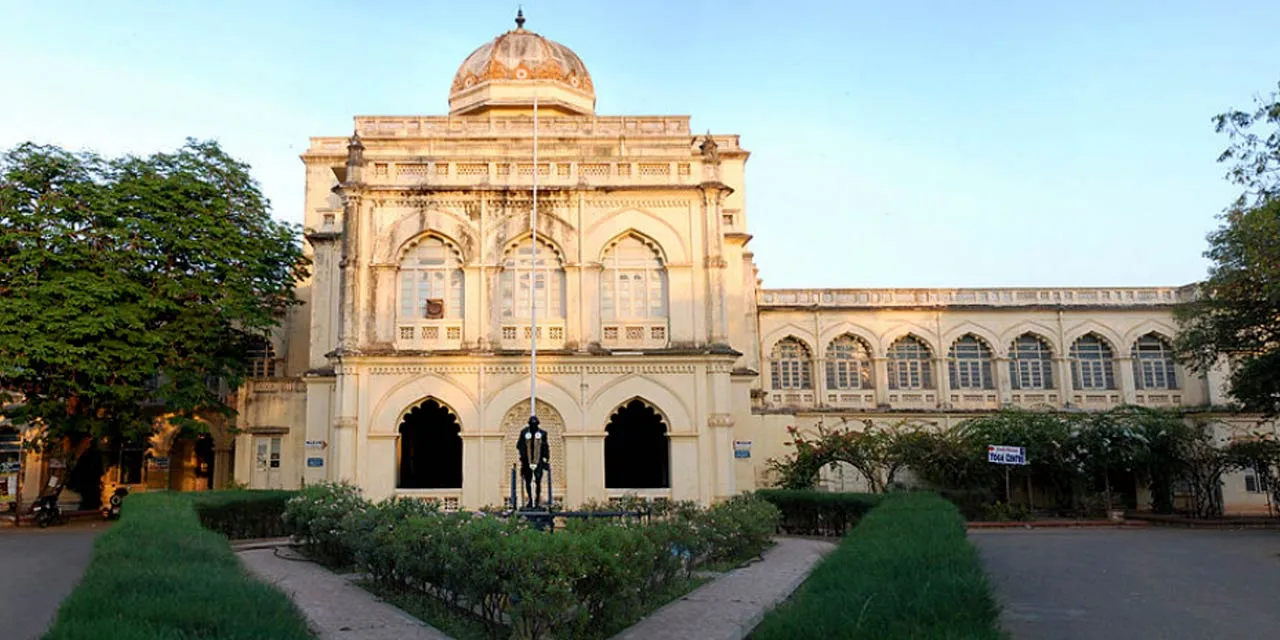
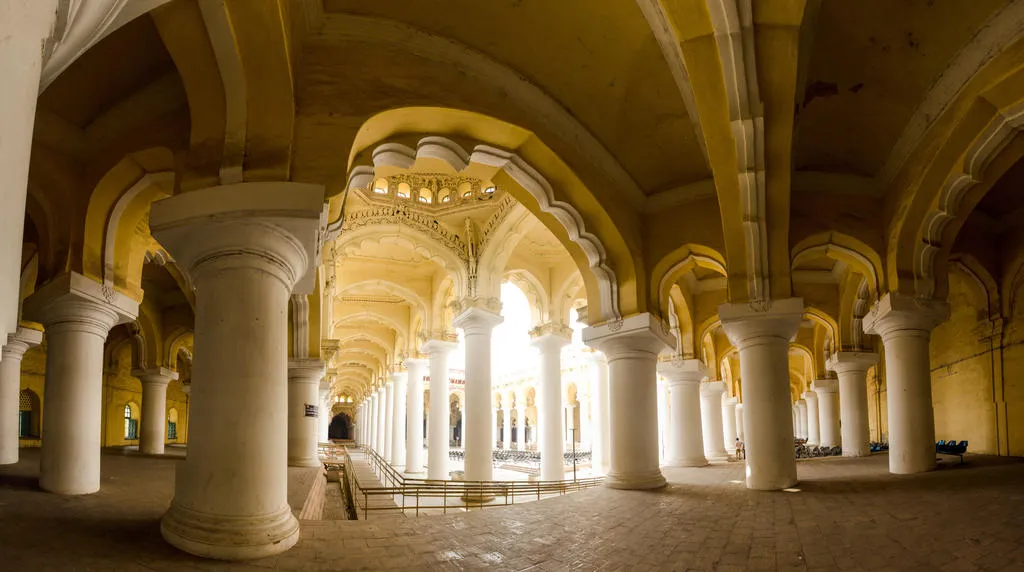
- Nearby pairing: Thirumalai Nayakkar Palace, Gandhi Memorial Museum, and the Vaigai River are all easily combined with a temple visit for a fuller day in Madurai
Frequently Asked Questions
Is there an entry fee for Meenakshi Amman Temple?
General darshan is completely free for all visitors. Paid special and VIP darshan tickets, generally ranging from about ₹50 to ₹300, are available for those who want faster access and shorter queues.
What are the temple's opening hours?
Generally 5:00 AM to 12:30 PM, and again from 4:00 PM to 10:00 PM. Some sources cite a slightly earlier 4:30 AM opening, and timings can shift by 15–30 minutes around festivals, so it's worth confirming current hours locally or via the temple's official website close to your visit.
How old is the temple?
The site's religious significance traces back to at least the 6th century CE based on Tamil Sangam literature and later devotional texts, making it roughly 2,500 years old in terms of continuous worship at this location. The physical structure visitors see today, however, was largely rebuilt and expanded in the 16th and 17th centuries following a 14th-century invasion.
Why was the temple destroyed, and who rebuilt it?
In 1310–1311 CE, Malik Kafur, a general of the Delhi Sultanate, raided Madurai and looted and substantially destroyed the temple along with much of the surrounding temple town. Restoration began under the Vijayanagara Empire later in the 14th century, and the temple was extensively rebuilt and expanded by the Nayaka dynasty — first by Vishwanatha Nayaka in the 16th century, then dramatically by Tirumala Nayaka in the 17th century, whose work largely defines the temple's current form.
Can non-Hindus enter the temple?
Yes. Visitors of all faiths are welcome to enter the temple complex and explore the gopurams, halls, and outer areas. However, only Hindus are permitted to enter the innermost sanctums of the Goddess Meenakshi and Lord Sundareswarar shrines specifically.
What is the dress code?
Modest dress is required, with shoulders and legs covered. Traditional attire is recommended — dhotis or kurtas for men, and sarees, churidars, or long skirts with covered shoulders for women.
Are mobile phones and cameras allowed inside?
Generally no. Mobile phones, cameras, and smartwatches are typically prohibited inside the temple, though secure locker facilities are available near the entrance for safekeeping during your visit.
How many gopurams does the temple have, and which is tallest?
The temple has 14 gopurams in total. The southern gopuram is the tallest, rising to approximately 170 feet (51.9 meters) across nine tiers, and is covered with well over a thousand painted stucco figures.
Does the Hall of 1000 Pillars really have 1,000 pillars?
No — despite the name, the Aayirakkal Mandapam actually contains 985 pillars, built in 1569. Some of these are musical pillars that produce distinct notes when struck.
What is the best time of year to visit?
December and January offer the most comfortable weather. The Chithirai Festival in April–May is the temple's grandest celebration and a remarkable time to visit, though crowds are at their largest. June through September tends to be quieter, with fewer crowds and good conditions for unhurried exploration.
What is the best time of day to visit?
Early morning, roughly between 5:00 and 7:00 AM, is consistently the least crowded and most peaceful time for darshan. Evenings after sunset offer a different, equally beautiful atmosphere with lamp-lit corridors and evening rituals.
How far is the temple from Madurai Airport?
About 11–12 km, roughly a 30-minute taxi ride.
How far is it from Madurai Junction railway station?
Just about 2 km, easily covered by auto-rickshaw, taxi, or even on foot.
Can I book darshan or pooja tickets online in advance?
Yes, the temple's official website offers online booking for special darshan, VIP darshan, and various pooja services such as Abhishekam and Kalyanam, allowing devotees to reserve a specific date and time slot in advance.
Is the temple wheelchair accessible?
Battery-operated vehicles and wheelchairs are available on-site for senior citizens and visitors with mobility needs, making a visit considerably more manageable for those who need it.
What is the significance of the nightly procession?
Every evening, a ritual procession carries an image of Lord Sundareswarar to Goddess Meenakshi's chamber, symbolizing their nightly reunion, before he is ceremonially returned the next morning. This ritual, tied to the Palliarai Pooja around 9:30 PM, is one of the temple's most distinctive and atmospheric living traditions.
What footwear and storage rules apply?
All visitors must remove footwear before entering. Storage counters are available at each entrance, typically for a small fee of around ₹5–₹10, or free of charge depending on the counter.
What other places can I visit near the temple?
Thirumalai Nayakkar Palace, the Gandhi Memorial Museum, the Vaigai River, and the Mariamman Teppakulam tank are all easily combined with a temple visit for a fuller day exploring Madurai's heritage.
The Takeaway
Meenakshi Amman Temple isn't a ruin you visit to imagine its former glory — it's a complete, living religious and civic institution that has survived destruction, been rebuilt at monumental scale, and still organizes the daily and seasonal rhythm of an entire city around it. Time your visit for early morning or the cooler winter months if you want a peaceful experience, or embrace the crowds during Chithirai if you want to see the temple at its most spectacular. Either way, give yourself a full two to three hours, dress respectfully, and don't rush the gopurams — each one is its own centuries-old story carved directly into stone.
Photo Gallery
What you'll experience
- 1
Architectural beauty
- 2
Cultural festivals
- 3
Spiritual rituals
- 4
Artistic sculptures
- 5
Historical significance
Nearby Destinations
Arulmigu Koodal Azhagar Temple
Gandhi Memorial Museum
Thirumalai Nayakkar Mahal
These destinations are in close proximity to Meenakshi Amman Temple and can be visited on the same trip.
Related Destinations
Visit Information
Opening Hours
Entry Fee
Best Time to Visit
October to March
Location
Madurai, Tamil Nadu
Contact
For inquiries: NA
Share this destination:
