 Translate
Brihadeeswarar Temple
About Brihadeeswarar Temple
Introduction: The Crown Jewel of Chola Architecture
Situated in Thanjavur (Tanjore), approximately 55 kilometers (a 1-hour drive) east of Tiruchirappalli (Trichy), Tamil Nadu, Brihadeeswarar Temple (locally known as Thanjai Periya Kovil or the Big Temple) is one of the most magnificent, architecturally astounding, and historically significant Hindu temples in world history. Built between 1003 and 1010 AD by the legendary Chola emperor Rajaraja Chola I, this UNESCO World Heritage Site stands as the ultimate pinnacle of Dravidian stone architecture and Chola imperial power.
Constructed entirely out of granite in a region with no local granite reserves, the temple is over 1,000 years old while remaining an active place of worship dedicated to Lord Shiva as Peruvudaiyar (Brihadeeswarar). Known for its monumental scale, engineering precision, and artistic perfection, it forms part of the UNESCO "Great Living Chola Temples" alongside Gangaikonda Cholapuram and Darasuram.
Key Shrines & Architectural Highlights
Brihadeeswarar Temple features world-famous monolithic carvings, soaring stone towers, and ancient fresco murals:
1. The 216-Foot Vimanam (Temple Tower)
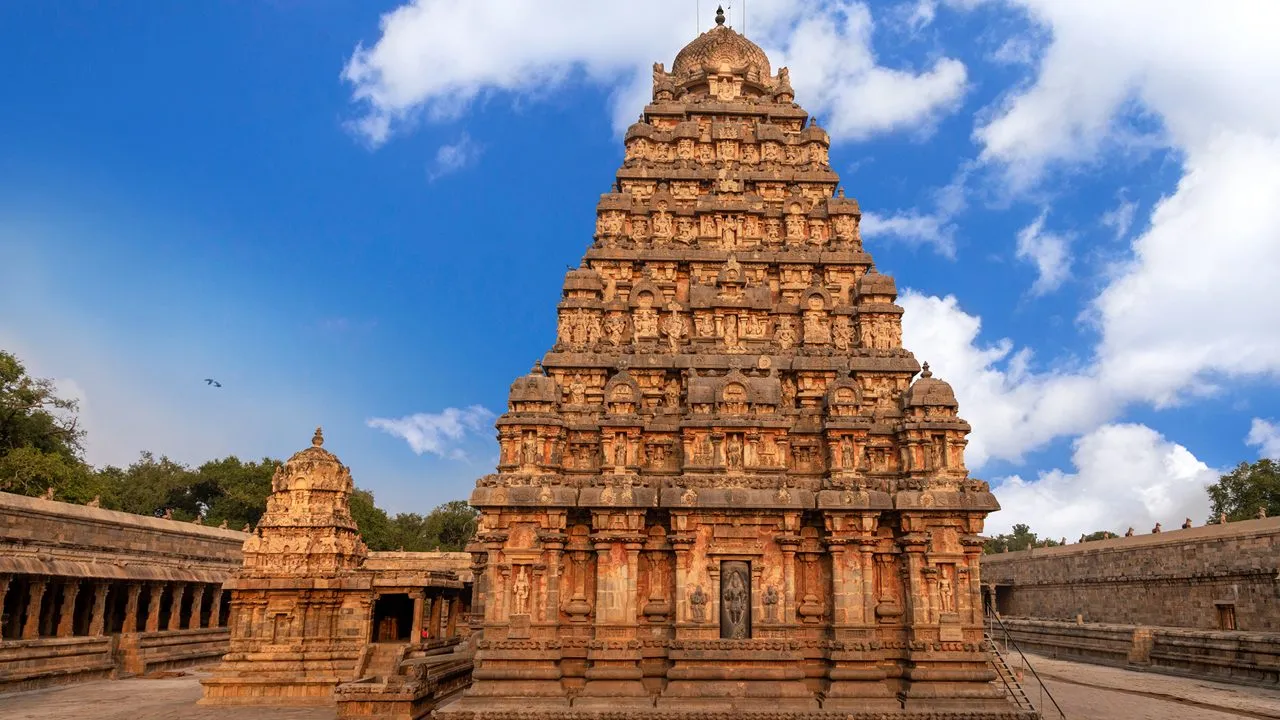
Rising to an astonishing height of 66 meters (216 feet), the central tower over the sanctum is one of the tallest temple towers in the world. Unlike most South Indian temples where the outer gate towers (*gopurams*) are tallest, here the main sanctum tower (*vimanam*) dominates the entire complex. At its apex rests the **Kumbam**—a single monolithic granite capstone weighing approximately 80 tonnes.
2. The Monolithic Nandi Statue
Guarding the entrance to the main sanctum under a pillared Nayak pavilion sits a massive **Nandi** (Lord Shiva's sacred bull), carved out of a single monolithic granite block. Measuring roughly 2 meters in height, 6 meters in length, and weighing over 20 tonnes, it is one of the largest single-stone Nandi sculptures in India.
3. The Massive Shiva Lingam (Peruvudaiyar)
The inner sanctum houses one of the largest monolithic **Shiva Lingams** in India, standing 3.7 meters (12 feet) tall on a massive base (*Avudaiyar*). Priests climb special elevated wooden platforms to perform ritual oil and milk ablutions (*Abhishekam*) over the giant Lingam.
4. Chola Fresco Paintings & Tamil Inscriptions
The dark corridors surrounding the inner sanctum contain rare 11th-century Chola fresco paintings illustrating Shiva legends, dance postures, and Rajaraja Chola with his guru Karuvurar. The entire granite base of the temple is engraved with detailed Tamil inscriptions recording temple donations, dancer names, army units, and administrative records.
Key Highlights & Attraction Summary
- UNESCO World Heritage Site: Masterpiece of Dravidian stone engineering built by Rajaraja Chola I.
- 80-Tonne Monolithic Capstone: Giant granite block (*Kumbam*) lifted 216 feet atop the main tower.
- 20-Tonne Single-Stone Nandi: One of India's largest monolithic bull sculptures in the courtyard.
- Granite Engineering Wonder: Built using over 130,000 tonnes of granite without mortar.
How to Reach Brihadeeswarar Temple from Trichy
Located in Thanjavur city, easily accessible via highway and rail from Trichy.
By Road (Car, Bus, or Taxi)
Driving from Trichy city center via the Trichy–Thanjavur National Highway (NH 83) takes about 50 to 60 minutes (approx. 55 km). Frequent express government and private buses run continuously between Trichy Central Bus Stand and Thanjavur New Bus Stand every few minutes.
By Passenger Train
Express and passenger trains operate regularly between **Tiruchirappalli Junction** and **Thanjavur Junction** (a 45 to 60-minute ride). The temple is located just 2 km from Thanjavur Junction Railway Station.
Best Time to Visit
Operating hours, daily temperature shifts, and seasonal weather govern optimal planning.
Opening Hours
The temple complex grounds are open daily from **06:00 AM to 12:30 PM** and **04:00 PM to 08:30 PM**.
Optimal Visiting Strategy
Arrive in the early morning between **06:00 AM and 08:30 AM** to explore the vast stone courtyard before the granite ground gets warm under the sun. Alternatively, visiting in the late afternoon from **04:30 PM to 06:30 PM** allows you to view the golden sunset light reflected on the red granite walls and admire evening temple illuminations.
Things to Do at Thanjavur Big Temple
- Walk Around the Vast Granite Courtyard: Stroll through the massive outer fort walls and pillared verandahs.
- Inspect Ancient Chola Tamil Inscriptions: View the 1,000-year-old carved scripts detailing Chola history along the lower walls.
- Photograph the Monolithic Nandi & Gopurams: Capture stunning photos of Keralanthakan and Rasarasan gopurams.
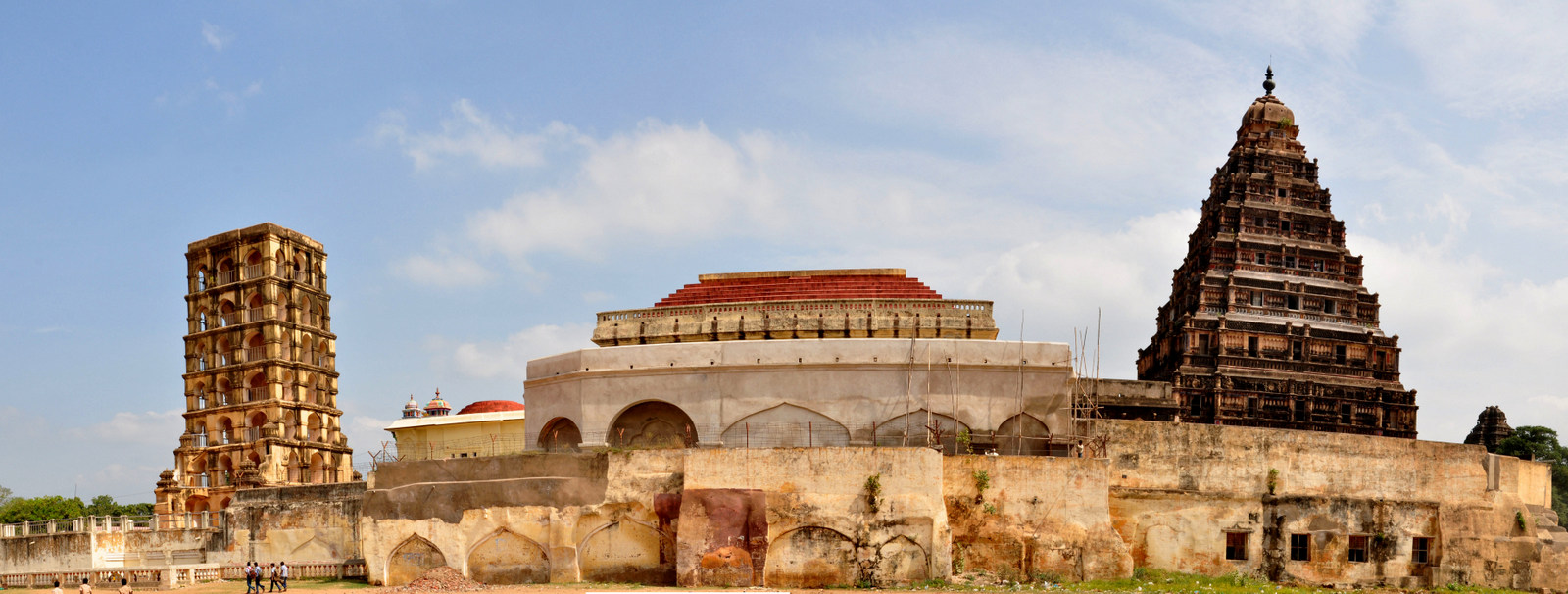
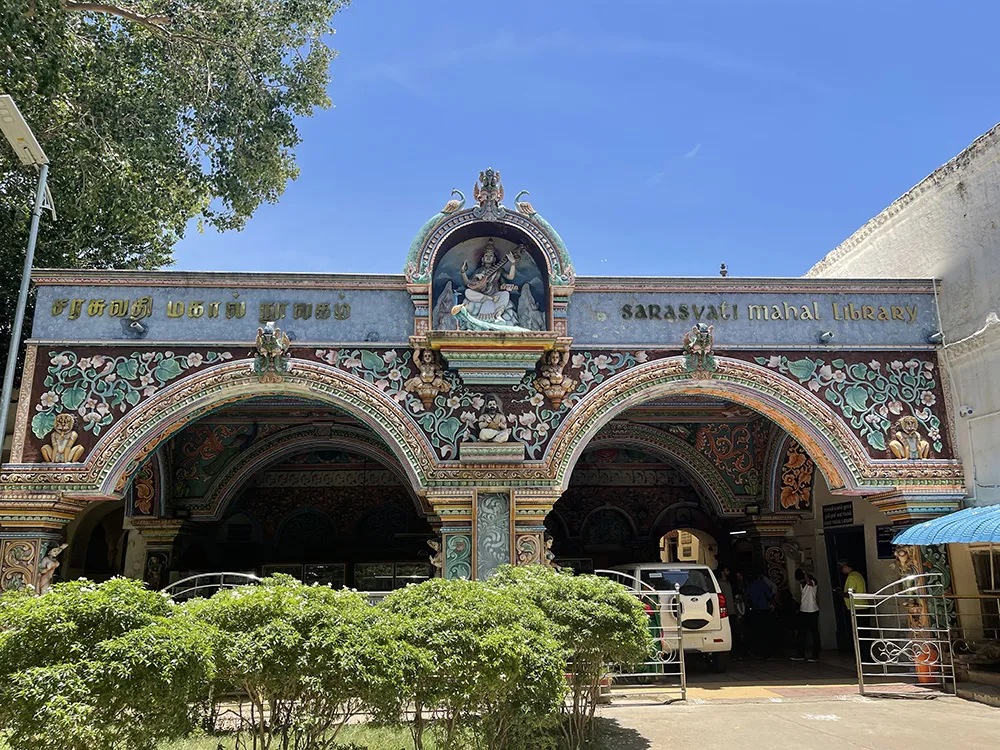
- Visit the Nearby Thanjavur Maratha Palace & Art Gallery: Combine your trip with a visit to the royal palace complex housing rare Chola bronzes and the Saraswathi Mahal Library (just 1.5 km away).
Essential Rules and Visitor Guidelines
- Modest Temple Dress Code: Shoulders and knees must be fully covered. Traditional attire (Dhoti, Saree, or Chudidhar) is required for entering the main sanctum queue.
- Remove Footwear at Courtyard Gate: Shoes must be deposited at official footwear counters before stepping into the main stone courtyard enclosure.
- Courtyard Sun Advice: The open granite courtyard floor absorbs heat by midday—wear socks if visiting during late morning hours.
Frequently Asked Questions (FAQs)
1. Where is Brihadeeswarar Temple located?
It is located in Thanjavur (Tanjore), Tamil Nadu, India, about 55 km east of Tiruchirappalli (Trichy).
2. Who built the Thanjavur Big Temple and when?
It was built by the Chola emperor **Rajaraja Chola I** between **1003 and 1010 AD**.
3. What is the height of the main temple tower (Vimanam)?
The central Vimanam stands **66 meters (216 feet)** tall.
4. Is Brihadeeswarar Temple a UNESCO World Heritage Site?
Yes, it is a designated UNESCO World Heritage Site and part of the "Great Living Chola Temples."
5. What is the entrance fee?
Entry to the temple grounds and sanctum is completely **FREE** for all visitors.
Conclusion
Brihadeeswarar Temple (Thanjavur Big Temple) stands out as South India's ultimate monument of imperial Chola majesty and Dravidian stone architecture, where 216-foot soaring vimanams, 80-tonne monolithic granite capstones, massive single-stone Nandi statues, and 1,000-year-old Tamil inscriptions converge near Trichy. From exploring the vast stone courtyard to admiring ancient Chola fresco art, Tanjore Temple delivers an unmissable heritage journey. Dress modestly, visit in the early morning hours, and explore Brihadeeswarar Temple Thanjavur!
Photo Gallery
What you'll experience
- 1
Architectural marvel
- 2
Historical exploration
- 3
Photography
- 4
Cultural insights
- 5
Spiritual ambiance
Nearby Destinations
These destinations are in close proximity to Brihadeeswarar Temple and can be visited on the same trip.
Related Destinations
Visit Information
Opening Hours
Entry Fee
Best Time to Visit
October to March
Location
Thanjavur, Tamil Nadu
Contact
For inquiries: NA
Share this destination:
