 Translate
Mukurthi National Park
About Mukurthi National Park
Introduction: The High-Altitude Shola Stronghold of the Western Ghats
Situated in the western corner of the Nilgiris district, Tamil Nadu, along the high plateau of the Nilgiri Hills at an elevation ranging from 2,000 to 2,629 meters above sea level, approximately 310 kilometers (a 6.5-hour drive) northwest of Tiruchirappalli (Trichy) and 45 kilometers west of Ooty, Mukurthi National Park is a pristine, high-altitude montane sanctuary. Spanning over 78.4 square kilometers of protected wilderness, the park was established in 1990 primarily to protect its keystone species, the endangered **Nilgiri Tahr** (*Hemitragus hylocrius*).
As a core component of the UNESCO World Heritage Nilgiri Biosphere Reserve, Mukurthi features rolling grasslands interspersed with dense, ancient **Shola forests** (montane evergreen stunt forests), peat bogs, and high-altitude mountain streams, offering an untouched wilderness landscape in South India.
Key Ecological Features & Wildlife Highlights
The national park combines high-altitude peak lookouts, endemic mountain ungulates, and unique shola-grassland ecosystems:
1. Prime Stronghold for the Nilgiri Tahr
Mukurthi is world-famous as one of the primary protected strongholds for the **Nilgiri Tahr**, Tamil Nadu's state animal. These agile wild mountain goats inhabit the steep cliff faces, rocky precipices, and high-altitude grasslands of the Mukurthi ridge line, where herds can be seen grazing during clear morning hours.
2. Mukurthi Peak & Dramatic Escarpments
Rising to 2,554 meters above sea level, **Mukurthi Peak** is the defining landmark of the park. Featuring a striking, pointed cliff edge resembling a pitched nose, the peak drops precipitously into the Silent Valley of Kerala to the west, offering breath-taking views across Western Ghats rainforest catchments.
3. Montane Shola-Grassland & Peat Bogs
The park preserves one of the finest remaining continuous stretches of the **Shola-Grassland Complex**. Deep valleys hold stunted evergreen trees draped in mosses, lichens, and orchids, surrounded by high-altitude rolling grasslands and ancient peat bogs that serve as primary water catchments for the Pykara and Bhavani rivers.
4. Endemic High-Altitude Fauna & Birdlife
In addition to the Nilgiri Tahr, Mukurthi shelters diverse endemic species:
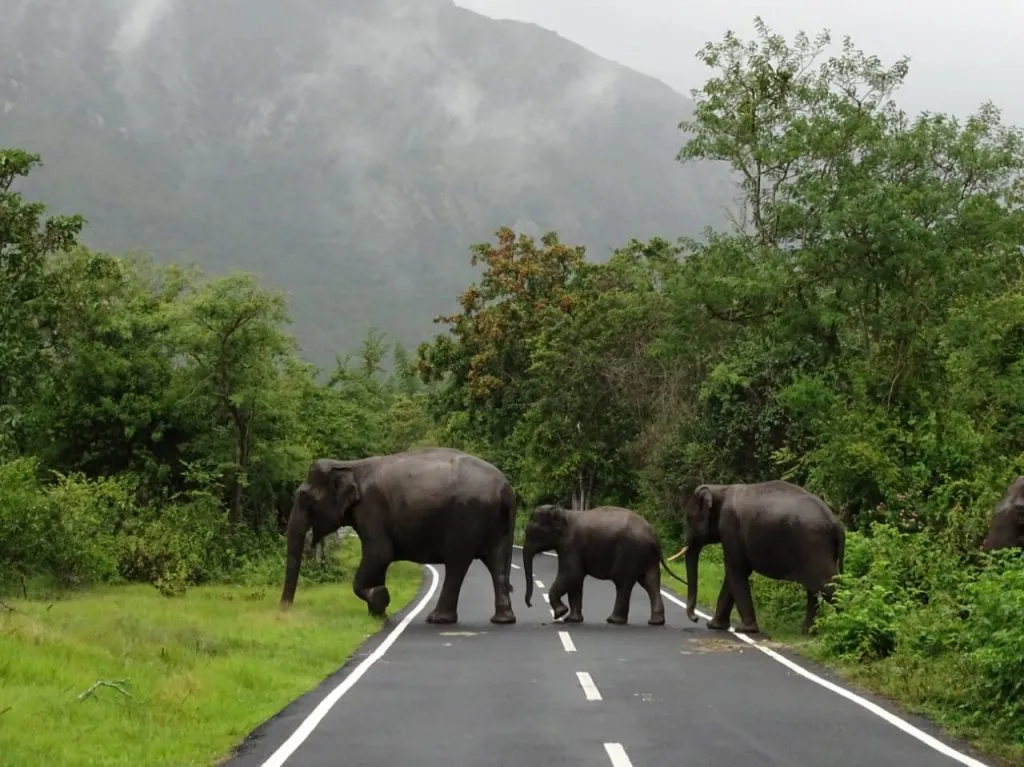
* **Mammals:** Royal Bengal Tigers, Asian Elephants, Leopards, Nilgiri Langurs, Nilgiri Martens, Sambar Deer, and Asian Small-clawed Otters.
* **Endemic Avifauna:** Nilgiri Pipit, Nilgiri Laughingthrush, Black-and-orange Flycatcher, Nilgiri Wood Pigeon, and Crested Serpent Eagles.
Key Highlights & Attraction Summary
- 78.4 Sq. Km High-Altitude Park: UNESCO Nilgiri Biosphere Reserve sanctuary perched above 2,000 meters.
- Nilgiri Tahr Stronghold: Dedicated national park protecting Tamil Nadu's state animal on rocky cliffs.
- Mukurthi Peak Lookout: Dramatic 2,554-meter mountain peak overlooking Silent Valley rainforests.
- Shola-Grassland Ecosystem: Pristine montane stunt forests, rolling high grasslands, and peat bog catchments.
How to Reach Mukurthi National Park
Located in the Nilgiris high plateau west of Ooty, accessible via scenic mountain passes and forest checkposts.
By Road from Trichy, Ooty, or Coimbatore (Car, Bus, or Taxi)
Driving from Trichy via Mettupalayam and Ooty takes roughly 6.5 hours (approx. 310 km). Driving from **Ooty hill town** via Avalanche Lake road takes about 1.5 to 2 hours (approx. 45 km) to reach the **Avalanche Forest Entry Checkpost**. State transport buses run up to Avalanche; from there, entry into the park requires official Forest Department eco-tourist vehicles or permitted trekking passes.
By Rail & Airport
The nearest railway station is **Udhagamandalam (Ooty) Railway Station** (approx. 45 km away) connected via the Nilgiri Mountain Railway. The nearest major airport is **Coimbatore International Airport (CJB)** (approx. 135 km away).
Best Time to Visit
Weather stability, monsoonal rainfall, and forest department permits govern travel planning.
Ideal Season & Operating Regulations
The best time to visit Mukurthi is from **October to March** (post-monsoon through winter when sky conditions are clear, frost decorates grasslands, and temperatures range between 5°C and 20°C). The park experiences extremely heavy monsoon rainfall from June to September and is often restricted during peak dry summer months to prevent forest fires.
Optimal Visiting Strategy & Permit Access
Because Mukurthi is a protected core biosphere area, **entry is strictly regulated by the Tamil Nadu Forest Department**. Visitors must secure prior written permission / eco-tourism trek permits from the **Office of the Wildlife Warden, Ooty**. Plan a **1 to 2-day trip** based in Ooty or Avalanche, starting early by **06:30 AM** to embark on guided eco-walks.
Things to Do at Mukurthi National Park
- Spot Nilgiri Tahr Herds: Use binoculars to scan high rocky ledges and cliff faces for grazing Tahr families.
- Embark on Guided Shola Treks: Walk permitted forest department trails through pristine shola groves and misty grasslands.
- Photograph High-Altitude Avifauna: Spot endemic Nilgiri Laughingthrushes, Pipits, and Black-and-orange Flycatchers.
- Explore Nearby Avalanche & Emerald Lakes: Pair your visit with **Avalanche Lake**, **Emerald Lake**, and the **Avalanche Eco-Tourism Zone** (15 km away).
Essential Rules and Visitor Guidelines
- Mandatory Permits Required: Unauthorized entry into core park areas without official forest department permits or naturalists is strictly prohibited and illegal.
- Strict No-Plastic & No-Campfire Zone: Single-use plastics, alcohol, smoking, campfires, and loud noise are completely banned across the biosphere core area—carry back all personal waste.
- Extreme Weather Preparedness: High-altitude mountain weather changes rapidly—carry warm woolens, windproof jackets, and sturdy trekking footwear.
Frequently Asked Questions (FAQs)
1. Where is Mukurthi National Park located?
It is located in the high plateau of the Nilgiris district, Tamil Nadu, India, about 45 km west of Ooty, 135 km from Coimbatore, and 310 km northwest of Trichy.
2. What animal is Mukurthi National Park famous for protecting?
It is famous for protecting the endangered **Nilgiri Tahr** (*Hemitragus hylocrius*), the state animal of Tamil Nadu.
3. Is casual public entry allowed inside Mukurthi?
No, entry is strictly regulated by the Tamil Nadu Forest Department—visitors must obtain permissions/permits from the Wildlife Warden’s office in Ooty.
4. What is the elevation of Mukurthi National Park?
The park lies at high altitudes ranging between 2,000 meters and 2,629 meters above sea level.
5. What is the best season to visit?
The best season to visit is from **October to March**, when clear winter days provide optimal visibility across mountain ridges.
Conclusion
Mukurthi National Park stands out as Tamil Nadu's iconic high-altitude mountain sanctuary, where 78.4 square kilometers of UNESCO Nilgiri Biosphere reserve, endangered Nilgiri Tahr cliff herds, dramatic Mukurthi Peak views, and ancient Shola grasslands converge. From spotting rare mountain ungulates on rocky ridges to trekking through mist-covered montane forests, Mukurthi delivers an unforgettable wilderness experience. Secure forest permits in advance, respect strict biosphere conservation rules, bring warm attire, and explore Mukurthi National Park!
Photo Gallery
What you'll experience
- 1
Trekking through shola forests
- 2
Wildlife spotting
- 3
Birdwatching
- 4
Exploration of montane ecosystems
Nearby Destinations
These destinations are in close proximity to Mukurthi National Park and can be visited on the same trip.
Related Destinations






Visit Information
Opening Hours
Entry Fee
Best Time to Visit
February to May and September to November
Location
Nilgiri District, Tamil Nadu
Contact
For inquiries: +91-423-2444098
Share this destination:
