 Translate
Pamban Island, Dhanushkodi Beach
About Pamban Island, Dhanushkodi Beach
Dhanushkodi Beach: A Journey to the Edge of the World on Pamban Island
At the southeastern tip of India lies a place where geography, mythology, and history collide with haunting beauty. Dhanushkodi, often referred to as 'The Ghost Town,' is situated on the tip of Pamban Island in Tamil Nadu. This narrow strip of land, barely 50 yards wide in some places, is where the vibrant, turquoise waters of the Gulf of Mannar meet the deep, turbulent blue of the Bay of Bengal. For the traveler who seeks destinations that are raw, visceral, and deeply storied, Dhanushkodi Beach is not just a destination—it is a pilgrimage to the edge of the world.
Once a thriving commercial hub with a bustling railway station, post office, and luxury hotels, Dhanushkodi was tragically wiped off the map in a single night during the Great Cyclone of 1964. Today, it stands as a breathtaking ruins-scape where the skeletal remains of a church and a school provide a stark contrast against the infinite horizon of the sea. Whether you are drawn by the spiritual legends of the Ramayana, the tragic history of the 1964 disaster, or the desire to witness a landscape so stark and beautiful it feels otherworldly, this guide covers everything you need to experience the magic of Pamban Island and Dhanushkodi Beach.
The Ghost Town: Relics of a Vanished Era
Walking through the ruins of Dhanushkodi is a humbling experience. Before 1964, this was the primary gateway between India and Sri Lanka, with a weekly ferry service connecting the two nations. The cyclone, which brought waves over 20 feet high, submerged the entire town, including a passenger train full of people. The government subsequently declared the town 'unfit for living,' and it has remained a silent witness to nature’s power ever since.
The Skeletal Church and School
The most photographed spots in Dhanushkodi are the ruins of the local Catholic Church and the primary school. The salt-weathered bricks and roofless structures against the backdrop of the shifting sands and the roaring ocean create a hauntingly beautiful scene. These ruins serve as a powerful reminder of the transience of human endeavor in the face of the elements. Photographers will find endless inspiration here, capturing the textures of decayed architecture against the brilliant, saturated colors of the tropical sky.
Dhanushkodi Beach: Where Two Seas Meet
The beach itself is a geological marvel. As you drive towards the very end of the island—a point known as Arichal Munai—you are flanked by water on both sides. This is one of the few places on earth where you can clearly distinguish the different temperaments of two seas.
- The Male Sea (Bay of Bengal): Known as the 'Penn Kadal' (Female Sea) by locals, these waters are notoriously turbulent, with aggressive waves and deep currents crashing against the shore.
- The Female Sea (Gulf of Mannar): Paradoxically, the waters on the opposite side are calm, shallow, and remarkably clear, resembling a giant, turquoise lagoon.
Standing at the tip of the land, you can see the white foam where these two giants collide. On a clear day, the limestone shoals known as Ram Setu or Adam’s Bridge are sometimes visible just beneath the surface, stretching out towards the coast of Sri Lanka, which is only 18 miles away.
The Pamban Bridge: The Gateway to the Island
Your journey to Dhanushkodi begins with crossing the iconic Pamban Bridge, India’s first sea bridge. This engineering marvel connects the Indian mainland to Pamban Island. Driving across the 2-kilometer-long road bridge offers a spectacular view of the century-old railway bridge running parallel to it. If you are lucky, you might witness the railway bridge’s central span open to allow large ships and fishing trawlers to pass through. The sight of a train slowly moving across the bridge, seemingly floating on the vast expanse of the blue sea, is one of the most iconic travel images of South India.
Photography and Wildlife: A Birder's Paradise
For wildlife photographers, the journey to Dhanushkodi is a goldmine. The marshy lands and salt pans along the road are a sanctuary for migratory birds. During the winter months, you can spot vast flocks of Greater Flamingos, their pink plumage creating a striking contrast against the white salt flats. You will also see seagulls, terns, and plovers darting along the shoreline. The lack of commercial development means the ecosystem is pristine, offering rare opportunities to capture coastal birds in their natural, undisturbed habitat.
How to Reach Dhanushkodi
Reaching Dhanushkodi has become significantly easier in recent years thanks to the construction of a new, world-class road that leads directly to the tip of the island.
- From Rameshwaram: Dhanushkodi is approximately 18 to 20 kilometers from the main Rameshwaram Temple. You can hire a taxi, rent a scooter, or take a local bus. Previously, travelers had to switch to 4x4 jeeps to navigate the sands, but the new road (NH 87) now allows private cars and bikes to drive all the way to Arichal Munai.
- By Train: The nearest major railway station is Rameshwaram (RMM), which is well-connected to Chennai, Madurai, and other major cities. The journey across the Pamban rail bridge is a bucket-list experience for many.
- By Air: The nearest airport is Madurai (IXM), located about 175 kilometers away. From Madurai, you can hire a private cab for a scenic 3.5-hour drive to the island.
The Best Time to Visit
The best time to visit Dhanushkodi is from October to March. During these months, the weather is pleasant with a cool sea breeze, making it comfortable to explore the ruins under the open sun. This is also the peak season for migratory bird spotting. The summer months (April to June) can be intensely hot, with the white sand and salt flats reflecting the sun’s glare. Monsoon season (July to September) can be unpredictable, and the road to Dhanushkodi is occasionally closed during heavy winds or high tide for safety reasons.
Frequently Asked Questions (FAQs)
Is Dhanushkodi safe for swimming?
No, swimming is extremely dangerous and strictly prohibited at the tip of Dhanushkodi. The currents where the two seas meet are incredibly strong and unpredictable. While you can walk on the sand and touch the water, do not venture deep into the sea.
Are there any hotels or staying options in Dhanushkodi?
No, there are no accommodation options in Dhanushkodi itself as it is a declared ghost town with no electricity or running water. Most travelers stay in Rameshwaram, which has a wide range of hotels and lodges, and visit Dhanushkodi as a day trip.
Can I drive my own car to Dhanushkodi?
Yes! Thanks to the new National Highway, you can now drive your own car or ride your bike all the way to the 'Last Land's End' at Arichal Munai. There is no longer a need to hire special 4x4 vehicles.
What is the significance of the name 'Dhanushkodi'?
The name means 'End of the Bow.' According to the Ramayana, Lord Rama used his bow to mark the spot from which the bridge to Lanka was to be built. After the war, he is said to have broken the bridge with one end of his bow at the request of Vibhishana.
Is food available at the beach?
There are very few temporary shacks near the ruins selling tender coconut, fried fish, and basic snacks. It is highly recommended to carry your own water and a packed meal if you plan to spend several hours exploring.
Photo Gallery
What you'll experience
- 1
Mythological exploration
- 2
Sunrise over the sea
- 3
Abandoned town photography
- 4
Spiritual tourism
- 5
Scenic drive on sandbar
Nearby Destinations
Sri Arulmigu Ramanathaswamy Temple

Dr. A.P.J. Abdul Kalam Memorial
These destinations are in close proximity to Pamban Island, Dhanushkodi Beach and can be visited on the same trip.
Related Destinations
Brihadeeswarar Temple
Meenakshi Amman Temple
Sri Ranganatha Swamy Temple
Sri Arulmigu Ramanathaswamy Temple
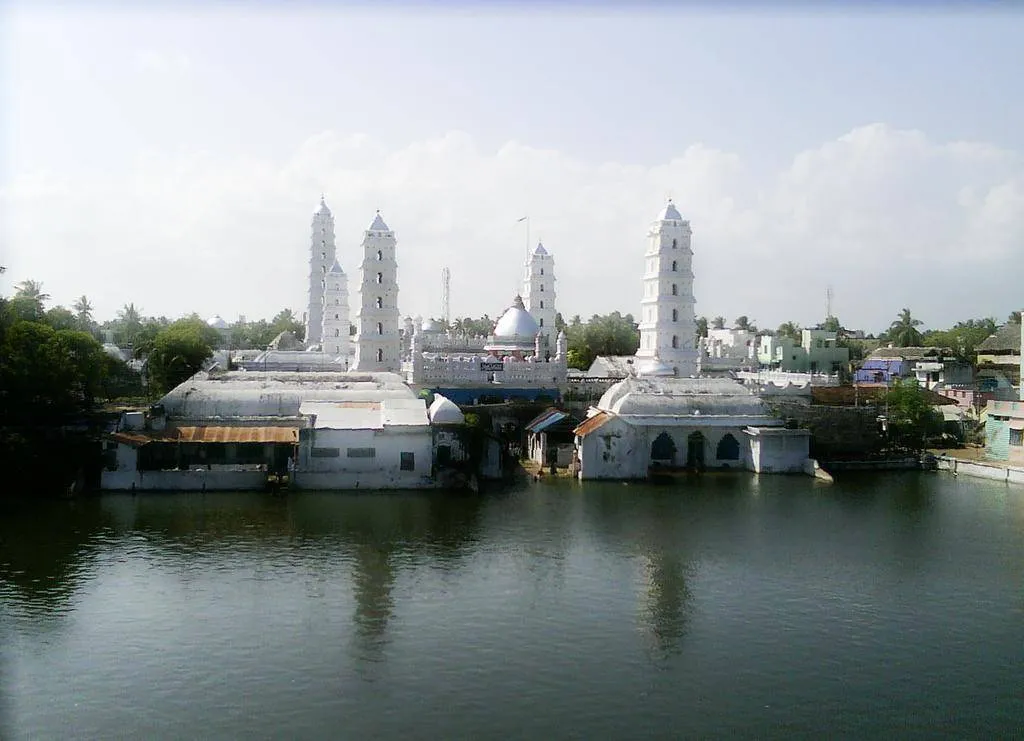
Nagore Dargah
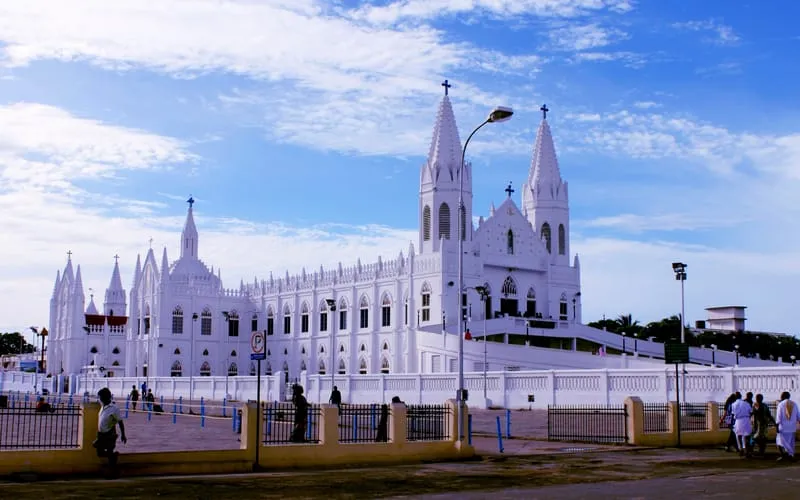
Velankanni Church
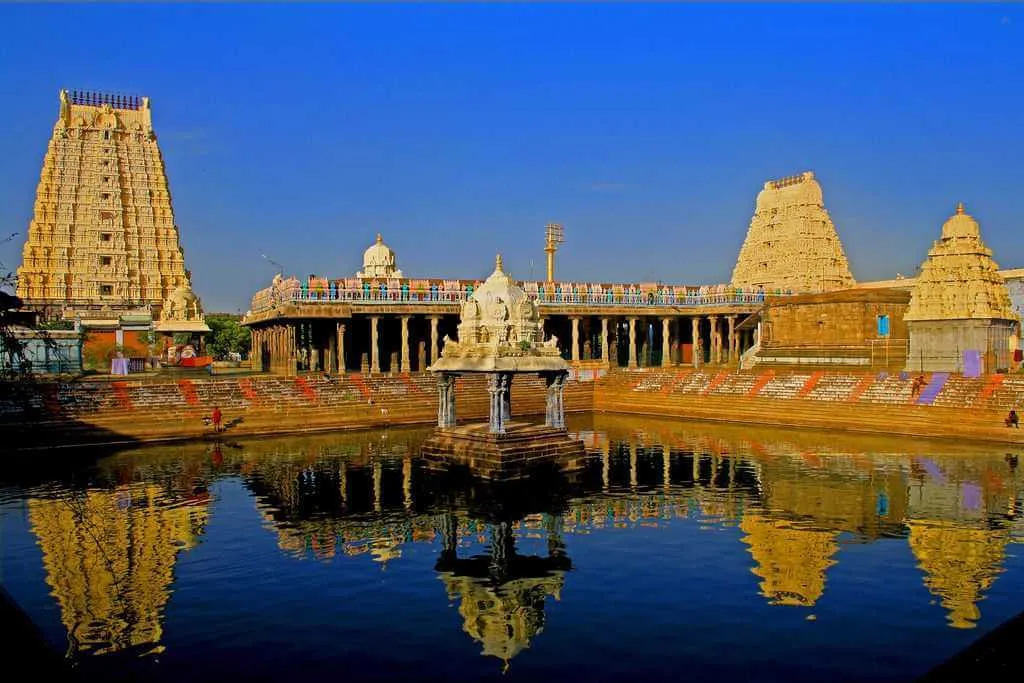
Ekambaranatha Temple
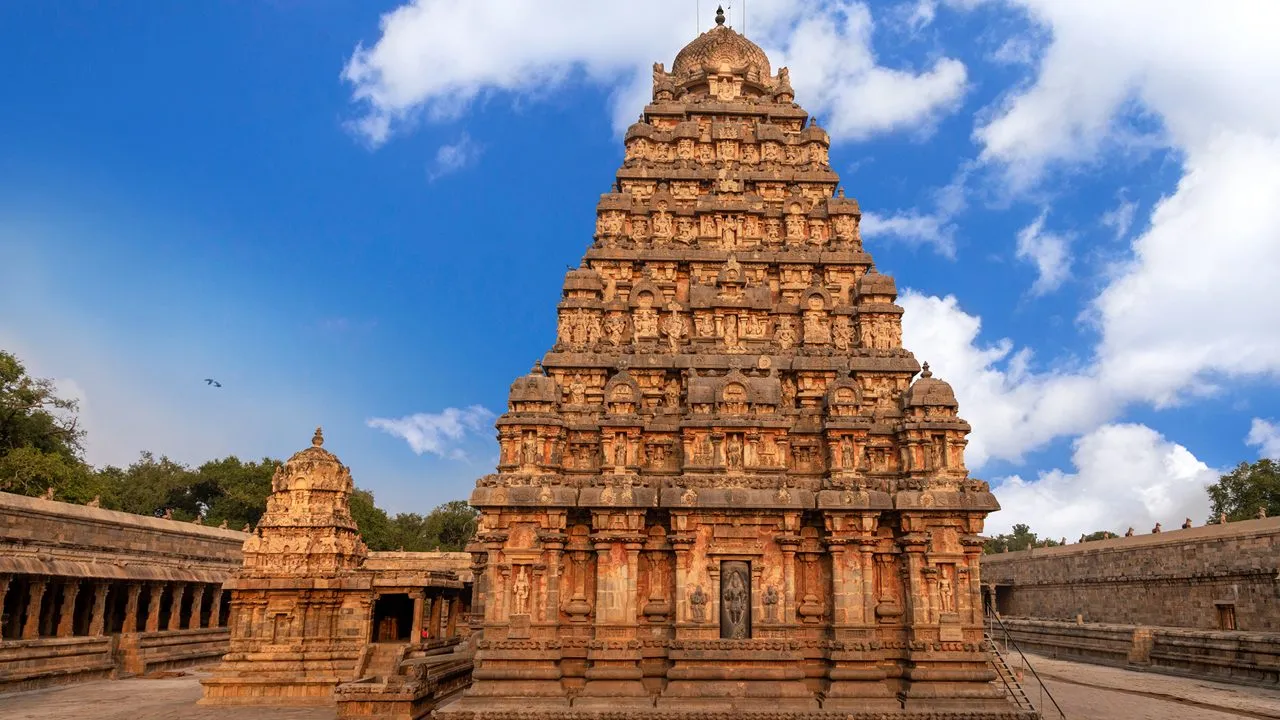
Sri Airavatesvara Temple
Visit Information
Opening Hours
Entry Fee
Best Time to Visit
October to February
Location
Rameswaram, Tamil Nadu
Contact
For inquiries: NA
Share this destination:
